
Let's Read Continuous Discovery Habits Together (April 2026)
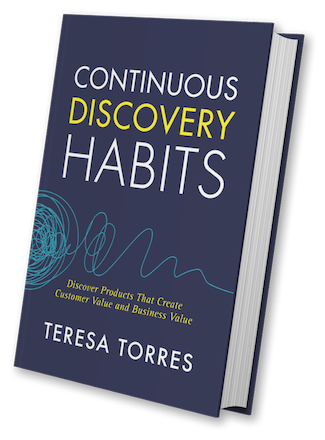
Continuous Discovery Habits turns five this year. And to celebrate we are reading the book together.
Each month, I am releasing an in-depth reading guide that includes:
- The chapters we will be reading
- A preview of the most important concepts we'll be learning about
- Short videos you can share with friends and colleagues to help spread the ideas
- Individual and team discussion questions to help you absorb and engage with the reading
- Team exercises to help you put the ideas into practice
- Additional reading to help you go deeper on the core ideas
We'll be discussing each month's reading in the comment section and we'll gather quarterly to discuss on a live call.
Joining late? No problem. I monitor the comments on each reading guide throughout the year. Start with the current month or go back to January—whatever works for you. You can ask for help, share what's working, and connect with other readers at any point. You can find all of the book club articles here.
If you want to participate, grab a copy of the book (or dig up your old copy), share the "Spread the Love" videos, reserve some time to do the team exercises, and register for the community sessions. Let's do this!
This Month's Reading
Chapter:
- Chapter 5: Continuous Interviewing
Estimated reading time: ~37 minutes
This month's chapter will introduce you to:
- Why interviewing on a regular cadence is critical to the success of any product trio
- How cognitive biases affect what we learn from direct questions
- The difference between research questions and interview questions
- How to use story-based interviewing to uncover actual customer behavior (not ideal behavior)
- The interview snapshot: a one-page tool for synthesizing what you learned from a single interview
- How to automate the recruiting process so interviewing becomes easier than not interviewing
- Why product trios should interview customers together
Need a copy? Grab the book.
Share the Love with Friends and Colleagues
We learn best in community. Use the following short videos to share the key concepts from this chapter with friends and colleagues. Invite them to participate in the book club with you.
- What are customer interviews? - Build a competitive advantage that compounds over time
- What should we ask in customer interviews? - Mitigating cognitive biases
- Research questions vs. interview questions - And why the difference matters
- Getting reliable feedback from customer interviews - Ask the right questions
- Who should conduct customer interviews? - My answer might surprise you
- How do you find customers to interview? - Automate the recruiting process
- The Interview Snapshot - How to synthesize a single customer interview
Reflect & Discuss What You Read
When we reflect and discuss what we read, we absorb more of the material. It helps us put what we learn into practice. Don't skip this step.
This month's chapter challenges us to build a regular habit of interviewing customers every week. It asks us to shift from asking direct questions (which invoke cognitive biases) to collecting specific stories about past behavior. For many teams, this represents a fundamental shift in how they engage with customers—moving from occasional "big research projects" to lightweight, continuous conversations that fuel daily decision-making.
Individual Reflection
- Think about the last time you interviewed a customer (or had a conversation with one). Did you ask them direct questions about their behavior, or did you collect specific stories about what they actually did? How might the answers have been different if you'd used the other approach?
- When you think about your own behavior—buying jeans, going to the gym, choosing what to watch on Netflix—can you identify gaps between your ideal self and your actual behavior? How might this same gap show up in your customers' answers to direct questions?
- Look at your calendar for the past month. How many customer interviews did you conduct? If it's fewer than four, what got in the way? What would need to change to make weekly interviewing sustainable for you?
Team Discussion
- As a team, discuss your current customer interview cadence. If you're not interviewing at least weekly, what are the biggest obstacles? Is it recruiting? Time? Synthesis? Pick one obstacle and brainstorm ways to reduce it.
- Try this exercise together: Ask someone on your team, "How does a product idea go from concept to launch at our company?" Have them write down their answer. Then ask them to describe the last specific feature or improvement that launched. Compare the two answers. What's different? What does this tell you about the gap between ideal process and actual process?
- If you already interview customers regularly, discuss: Who participates in the interviews? Is it just one person (like the designer or product manager), or does the whole trio join? What value might you be missing by not having all three perspectives in the room?
Put It Into Practice
Understanding the importance of continuous interviewing is one thing. Actually conducting interviews every week and synthesizing what you learn is where the real work begins. These exercises will help you build your interviewing habit and practice the skills from this chapter.
Exercise: Conduct a Story-Based Interview
Time: 20–30 minutes
Do this: With your product trio
Schedule an interview with a current customer. Instead of preparing a long list of questions, identify a handful of research questions (what you need to learn) and translate them into one story-based interview question (what you'll ask).
For example:
- Research questions:
- What challenges do customers face when onboarding?
- Where do they get stuck?
- What are we asking them to do that they don't understand?
- How can we make it easier for them to get to the activation moment?
- Interview question:
- Tell me about the first time you used our product.
During the interview, practice excavating the story using temporal prompts: "What happened first?" "What happened next?" "What happened before that?" When the participant starts generalizing ("I usually..." or "In general..."), gently guide them back to the specific instance.
After the interview, debrief as a trio: What did each of you hear? What opportunities did you identify? What surprised you?
Do you want personalized and detailed feedback on how well you conducted an interview? Our Interview Coach can help. Get access through our Story-Based Customer Interviews course.
Exercise: Create Your First Interview Snapshot
Time: 30 minutes
Do this: With your product trio, immediately after your interview
Using the interview snapshot template (grab one from the Supplementary Reading section below), work together to capture:
- A photo of the participant (or a visual that represents their story)
- Quick facts that help you understand this customer's context
- A memorable quote that will help you recall this interview months from now
- The opportunities (needs, pain points, desires) you heard in the interview
- Any insights that seem notable but aren't explicitly opportunities yet
- An experience map that illustrates the story they told you
Time yourselves. As you get more practice, you should be able to complete an interview snapshot in 15–20 minutes.
Go Deeper: Additional Reading
If you prefer an audio summary of this month's reading, including the book chapters and the following resources, I've included an audio version for paid subscribers at the bottom of this post.
Related In-Depth Guides
Supplementary Reading
The Value of Continuous Interviewing:
- Why Product Trios Should Interview Customers Together - How interviewing together ensures research is timely, actionable, and believable
How to Find Customers to Talk To:
- Customer Recruiting: Get Easy Access to Customers Week Over Week - Practical strategies for automating your recruiting process
- Ask Teresa: How Do You Select Customers for Customer Interviews? - Who to interview and how to recruit them
- Tools of the Trade: Finding People to Interview Before You Have Customers - Recruiting strategies for early-stage products
What to Ask in Your Interviews:
- Why You Are Asking the Wrong Customer Interview Questions - Understanding the gap between ideal behavior and actual behavior
- Story-Based Customer Interviews Uncover Much-Needed Context - Why collecting specific stories is more reliable than asking direct questions
- Ask Teresa: What Are the Best Customer Interview Questions? - Common questions and how to improve them
- Ask About the Past Rather than the Future - Why memories about recent instances are more reliable than speculation
How to Take Notes and Synthesize What You Are Learning:
- How to Take Notes During Customer Research Interviews - Practical tips for capturing what you hear
- The Interview Snapshot: How to Synthesize and Share What You Learned from a Single Customer Interview - A comprehensive guide to creating and using interview snapshots
- Customer Interview Analysis: How AI Helps and Hurts - Learn how to use AI effectively
Videos
- All Things Product Podcast: Customer Interview Analysis - Petra and I discuss using AI to analyze customer interviews, the risks and benefits, and why your interviewing skills matter more than any AI tool
Other Resources from Around the Web
- The Top 5 Mistakes Product Teams Make With Customer Interviews by Pragmatic Live
- Continuous interviewing with Kristian Collin Berge (CEO & Co-founder at UX Signals) by Afonso Franco
- How to Make Time for Customer Interviews & Validation by Rich Mironov
- Brave UX: An interview with Teresa Torres by Brendan Jarvis
Related Courses
- Customer Recruiting for Continuous Discovery: Get easy access to customers week over week.
- Story-Based Customer Interviews: Collect reliable feedback from every customer conversation.
Our Live Discussion Schedule
Our live discussion sessions are for paid subscribers. Sessions are not recorded. Invitations will go out to Supporting Members and CDH Members two weeks before the scheduled event. But reserve the time on your calendar now.
- Tuesday, June 16, 2026: 9am–10am PDT
- Thursday, September 17, 2026: 9am–10am PDT
- Wednesday, December 16, 2026: 9am–10am PST
Audio Summary
This summary was produced by NotebookLM. The sources supplied were the book chapters as well as all of the additional reading.
This article is part of the CDH Book Club celebrating the five-year anniversary of Continuous Discovery Habits. See all book club posts.
Comments ()