
Let's Read Continuous Discovery Habits Together (January 2026)
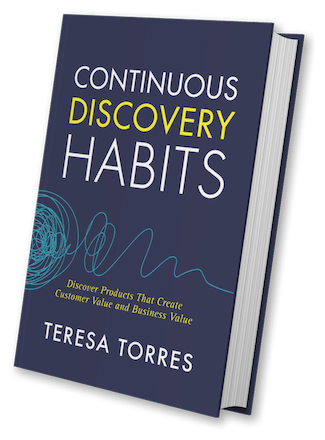
Continuous Discovery Habits turns five this year! And what a run it's been.
Over 135,000 people have bought the book. And thousands of teams are putting the habits into practice. But I know it's not easy.
It can feel like you are the lone champion pushing for change in your organization. So I want to do more to build community and connect you with others who are also putting the habits into practice. I want to help you share it with your teammates and spread it across your organization.
And that's why I'm excited to announce the 2026 Continuous Discovery Habits Book Club. We'll read the book together—one section per month—with discussion questions, practical exercises, and resources to help you actually do the work, not just read about it.
Whether you're picking up the book for the first time or revisiting it with fresh eyes, this book club is designed to help you build real habits. By December, you won't just understand continuous discovery—you'll be practicing it.
Every month, I'll release a reading guide (like this one) with reflection questions, exercises, and resources to go deeper on each of the key concepts. I'll include short videos that you can share with friends and colleagues to help spread the ideas.
I'll monitor the comments on each reading guide throughout the year. So even if you join the book club late, you can use the comments to ask for help, share what's working, and connect with other readers.
And each quarter, I'll host a live discussion session where we can come together to connect with peers who are working through the same habits.
If you want to participate, grab a copy of the book (or dig up your old copy), share the "Spread the Love" videos to get friends and colleagues on board, reserve some time to do the team exercises, and register for the community sessions. Let's do this!
🎖️ This reading guide is brought to you by New Year, New Habit: The 5-Day Customer Interview Challenge. Become a more confident interviewer in less than a week. You'll conduct one practice interview a day, get personalized and detailed feedback so you know exactly what to improve, and we'll be giving out daily prizes to the most improved. Join the challenge today.
This Month's Reading
Chapters:
- Introduction
- Chapter 1: The What and Why of Continuous Discovery
- Chapter 2: A Common Framework for Continuous Discovery
Estimated reading time: ~40 minutes
These chapters will introduce you to:
- Why discovery and delivery are not phases—they happen continuously
- A clear benchmark for what "continuous discovery" looks like
- What product trios are and why they're the foundation for good discovery
- Six prerequisite mindsets you'll need before these habits can stick
- The opportunity solution tree—a visual framework for connecting what you're building to why you're building it
Need a copy? Grab the book.
Share the Love with Friends and Colleagues
We learn best in community. Use the following short videos to share the key concepts from these chapters with friends and colleagues. Invite them to participate in the book club with you.
- What is product discovery?
A quick intro to the key idea behind discovery work - Defining continuous discovery
A clear benchmark to aspire to - The rhythm of continuous discovery
The two small research activities you should do every week - The underlying structure of product discovery
How outcomes, opportunities, and solutions connect - What's a product trio?
Why cross-functional collaboration matters
🎖️ This reading guide is brought to you by Just Now Possible, a podcast about how AI products come to life—straight from the builders. If you are being asked to add AI features to your roadmap, you don't have to start from scratch. Get a head start by hearing how other teams are navigating similar challenges. Find it on YouTube, Apple Podcasts, and Spotify.
Reflect & Discuss What You Read
When we reflect and discuss what we read, we absorb more of the material. It helps us put what we learn into practice. Don't skip this step.
For this month, we'll focus on building awareness of our current practices. There are no wrong answers. The first step in any change is getting a baseline of where we are at. That's our goal. Next month, we'll work on taking some small steps toward building stronger habits.
Individual Reflection
- Think about a recent product decision your team made. Did you rely more on opinions, data, or customer input? Get specific.
- Which of the six prerequisite mindsets (outcome-oriented, customer-centric, collaborative, visual, experimental, continuous) is strongest for you personally? Which would require the biggest shift?
- What's your reaction to weekly customer touch points? Does this excite you? Scare you? Something else?
Team Discussion
- Who on your team is responsible for discovery and delivery? How interconnected are these activities?
- How does your team currently collaborate cross-functionally? When product, design, and engineering come together, is it to make decisions—or to hand off work?
- Think of a recent feature your team built. What opportunity did it address? What else could you have built to address that opportunity?
Put It Into Practice
For this introductory month, I want you to focus on building awareness of what you currently do.
Exercise: Draw Your Current Discovery Process
Time: 60 minutes
Do this: Solo first, then compare with your team
Take a blank piece of paper and draw how your team currently decides what to build. Don't draw an idealized process—draw reality. Include:
- Where ideas come from
- Who makes decisions and how
- Where (if anywhere) customers enter the picture
- How you know if you built the right thing
Once you've drawn your own version, compare it with your teammates' drawings. Where do your perceptions differ? What does that tell you about your shared (or not so shared) understanding of how you work?
Exercise: Audit Last Week's Decisions
Time: 30 minutes
Do this: Solo or with your team
List every product decision your team made last week—big or small. For each one, note:
- Who made the decision?
- What information was it based on?
- Was customer input part of the process? If so, how?
Look at your list. How many decisions included direct customer input? How many were based on assumptions, opinions, or secondhand information? What patterns do you notice?
Go Deeper: Additional Reading
If you prefer an audio summary of this month's reading—including the book chapters and the following resources—I've included an audio version at the bottom of this post.
Related In-Depth Guides
- Product Discovery Basics: Everything You Need to Know
- Product Trios: What They Are, Why They Matter, and How to Get Started
- Opportunity Solution Trees: Visualize Your Discovery to Stay Aligned and Drive Outcomes
Other Voices
- Product Discovery: Pitfalls and Anti-Patterns by Chris Jones
- Addressing the Challenges of Product Discovery by Saeed Khan
- Making Product Discovery Work in Small Teams by Sofia Quintero
- Product Waste and the ROI of Discovery by Richard Mironov
Related Courses
- Product Discovery Fundamentals – If you want structured practice with these concepts, this course walks you through the complete continuous discovery framework with hands-on exercises.
Our Live Discussion Schedule
Our live discussion sessions are for paid subscribers. Sessions are not recorded. Invitations will go out to Supporting Members and CDH Members two weeks before the scheduled event, but reserve the time on your calendar now.
- Wednesday, March 18, 2026: 9am–10am PDT and 4pm–5pm PDT
- Tuesday, June 16, 2026: 9am–10am PDT and 4pm–5pm PDT
- Thursday, September 17, 2026: 9am–10am PDT and 4pm–5pm PDT
- Wednesday, December 16, 2026: 9am–10am PST and 4pm–5pm PST
Audio Summary
This summary was produced by NotebookLM. The sources supplied were the book chapters as well as all of the additional reading.
This article is part of the CDH Book Club celebrating the five-year anniversary of Continuous Discovery Habits. See all book club posts
Comments ()